
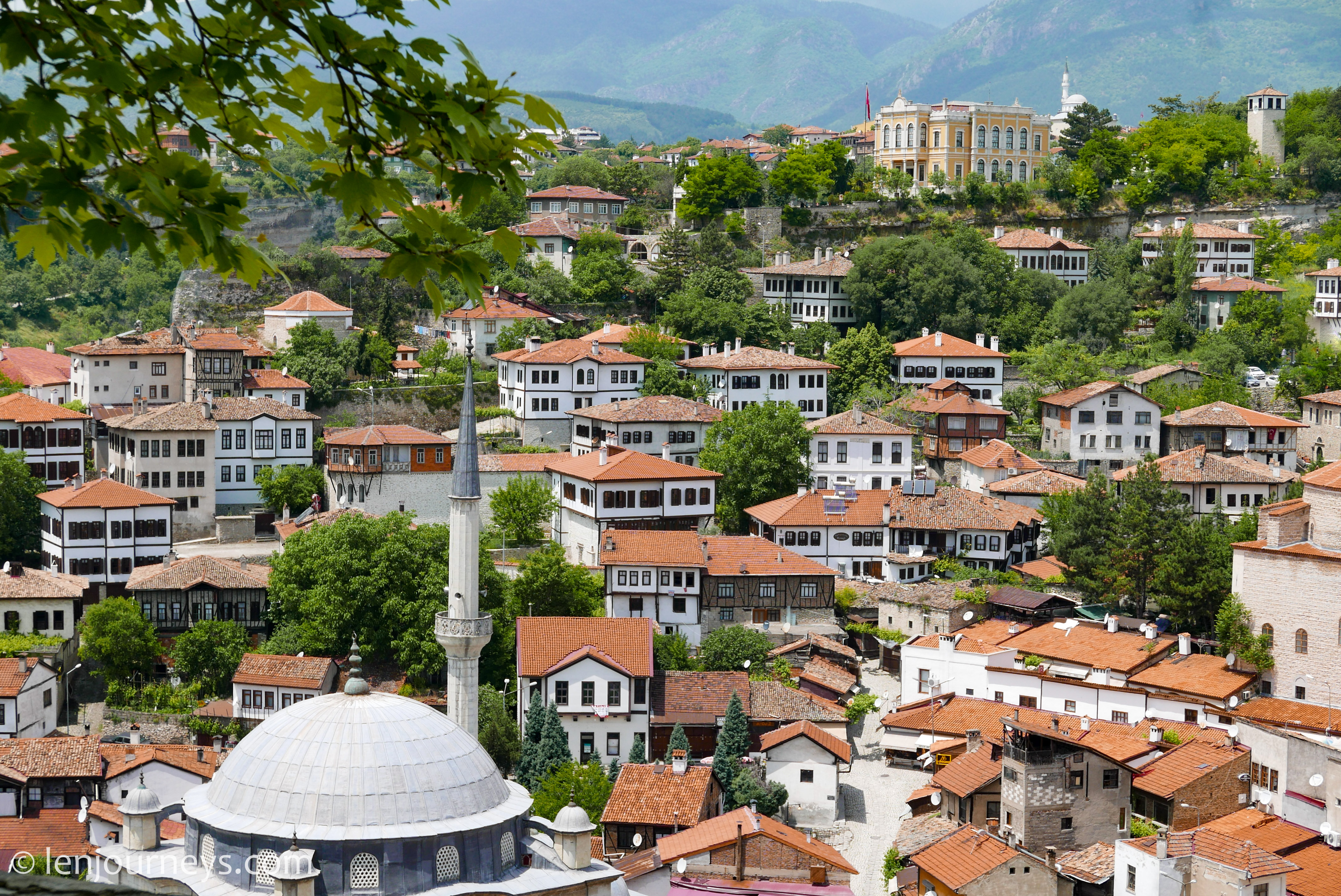
Nothing seems to have changed in Safranbolu’s old town for the last three centuries. A vision of numerous red-tiled roofs and cobblestoned alleys meandering around timber-framed houses, inns, bathhouses, and mosques. It’s like a living museum that exhibits the finest examples of traditional Ottoman architecture and urban layout.
Safranbolu – a small town in a deep ravine of Turkey’s Black Sea region – was a major crossroad on Ottoman commercial routes between East and West. Caravans frequented this town en route to Istanbul and traded a precious ingredient from which the city gets its name: saffron. Often praised as “red gold”, these flowers are native to Safranbolu and famous for their diverse usage, from flavoring, dying, and cosmetics to pharmaceuticals. Even today, saffron is still grown in abundance around the city.
The 17th, 18th, and 19th centuries are considered the golden age of Safranbolu as magnificent houses and mansions sprung up across the gorge. They are built with stone on the bottom and wood on the top, with impressive red-tile roofs and large windows to let in lots of natural daylight. Each house displays excellent craftsmanship and aesthetic pleasure, which greatly influenced urban development throughout much of the Ottoman Empire.
By the late 19th century, the fortune of Safranbolu, however, changed. The emergence of railways led to the rapid decline and eventually to the collapse of the caravan trade, forcing the town to adapt to a new socio-economic role in steel production. Safranbolu grew beyond the ravine, and new districts developed nearby. But the old town, with nearly a thousand of Ottoman-era structures, was beautifully preserved. This remarkable effort was recognised by UNESCO who then designated Safranbolu as a World Heritage Site in 1994.
A crucial stop on the Ottoman trade routes.


1. Safranbolu Old Town
Strolling through the historic core of Safranbolu, I felt as though I was transported back to Turkey’s pre-industrial era where traditional houses dominated the townscape. They contrast with the surrounding flower gardens, grapevines, and pines. Most have become tea houses or spice shops, while others have been delicately renovated into inns. Dotted among them are mosques, caravanserais, and bathhouses that are unmistakable thanks to their domed roofs.
Experience Turkey’s pre-industrial era.
I continued down the cobbled lane to a bazaar where the clang of hammers caught my attention. Here, the blacksmiths of Safranbolu still shape farming tools and household goods. Established in 1796 by Izzet Mehmet Pasha, the grand vizier during the reign of Sultan Selim III, this market used to have more than a hundred workshops. But now only four remain.
Before recognizing where I was, a gentle blacksmith had invited me to his shop for tea. Though there was a language barrier, his rough hands revealed he was an artisan who had decades of working experience. The shop itself resembles Aladdin’s cave filled with handmade teapots, trays, locks, and door-knockers with sophisticated patterns. Toward the back of the shop is the mighty stream that carved out the ravine over millions of years.


1.1 Kaymakamlar Gezi Evi (The Lieutenant’s House)
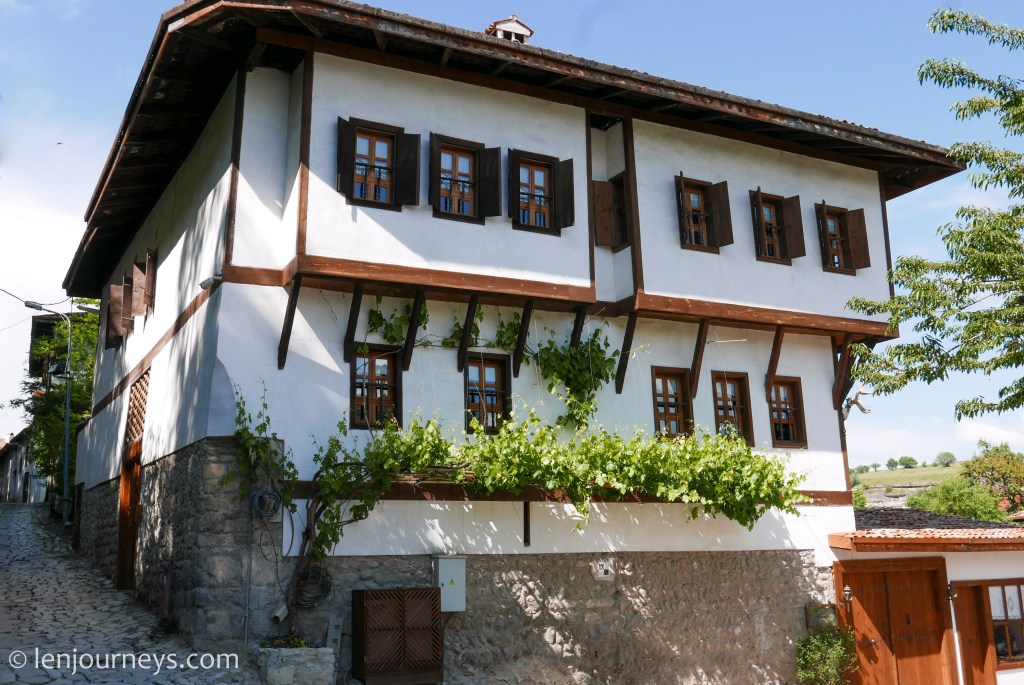
To look closely at traditional Ottoman architecture, I headed to Kaymakamlar Gezi Evi – a mansion once owned by a colonel lieutenant. It’s one of Safranbolu’s best-preserved buildings that is open to the public as a museum. The house consists of three stories, with the ground floor built of stone while the other two floors are made of wood and mud bricks. Elaborate woodworks adorn the interior, from indoor knobs, banisters, and walls to the exuberantly carved ceiling.
One of Safranbolu’s best-preserved.
Passing through the main entrance on the ground floor, I entered the area where daily chores took place. It also contains the barn and the storage. Meanwhile, the upper floors are living quarters. They are divided into six rooms and segregated by gender. Each room has ample of window space and is furnished with sofas, carpets, and cupboards storing mattresses. They were taken out of the cupboards at night to turn the “living room” into a “bedroom” and so forth.
Another unique feature is the rotating lifting system. It connects the two floors, allowing the ladies in the house to serve food or transfer items without being seen by male guests. Overall, the Lieutenant’s House is a superb example of Ottoman civilian architecture. It also presents the daily life in Safranbolu during the 18th and 19th centuries.


1.2 Museum of City History
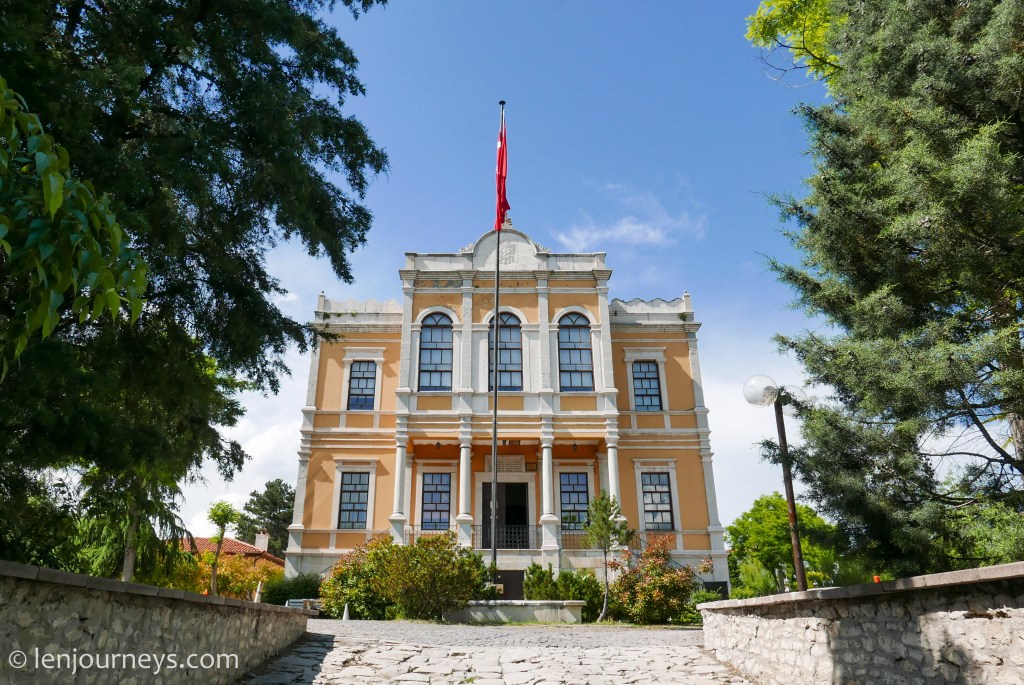
The social life in old Safranbolu is also re-created in the Museum of City History – a mustard-yellow residence overlooking the historic core. The two-storied building was constructed in the late 18th century and served as the city hall for many years, before being converted into a museum in 2007.
Today, this landmark exhibits a collection of clothes, accessories, and nearly forgotten handicrafts, which visualizes jobs during the Ottoman period. A replica of a lokum shop can also be found on the entry floor. Just behind the museum is a half-timber clock tower comissioned by grand vizier Izzet Mehmet Pasha.


2. Tokatli Canyon
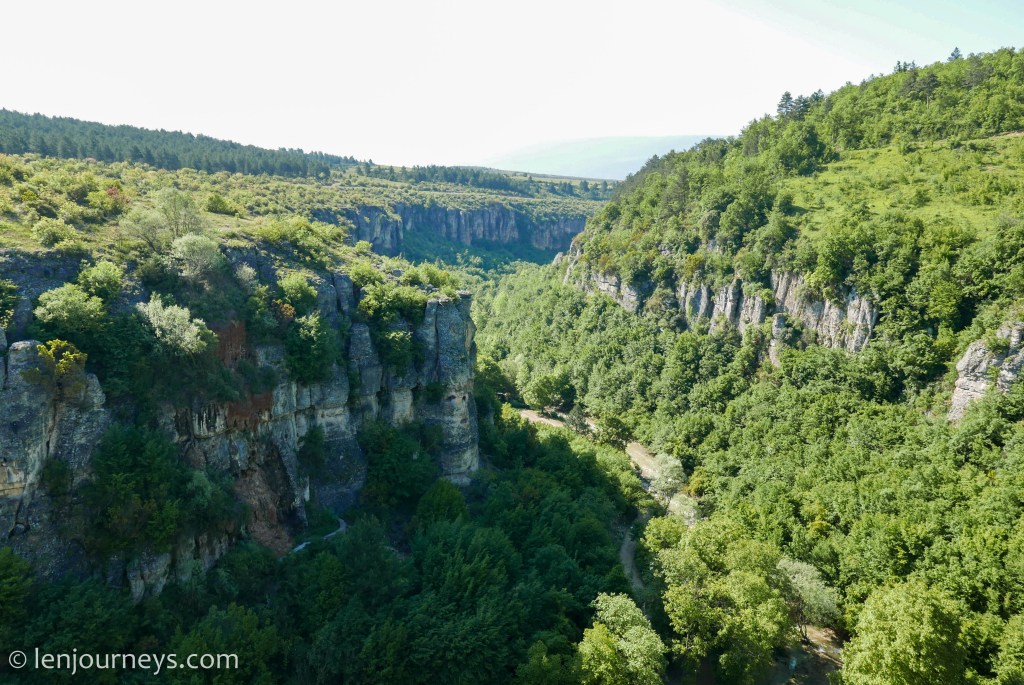
When historic architecture began to feel a bit like old news, I started a walk in the wondrous Tokatli Canyon, just seven kilometers from Safranbolu’s old town. It’s among the deepest canyons in Turkey whose cliffs reach 1,200 meters in height. The canyon stretches about nine kilometers, with a stream meandering through the verdant landscape. A wooden walkway allows visitors to easily stroll the canyon’s depths. It led me through an ever-changing scenery of majestic cliffs and beautiful greenery.
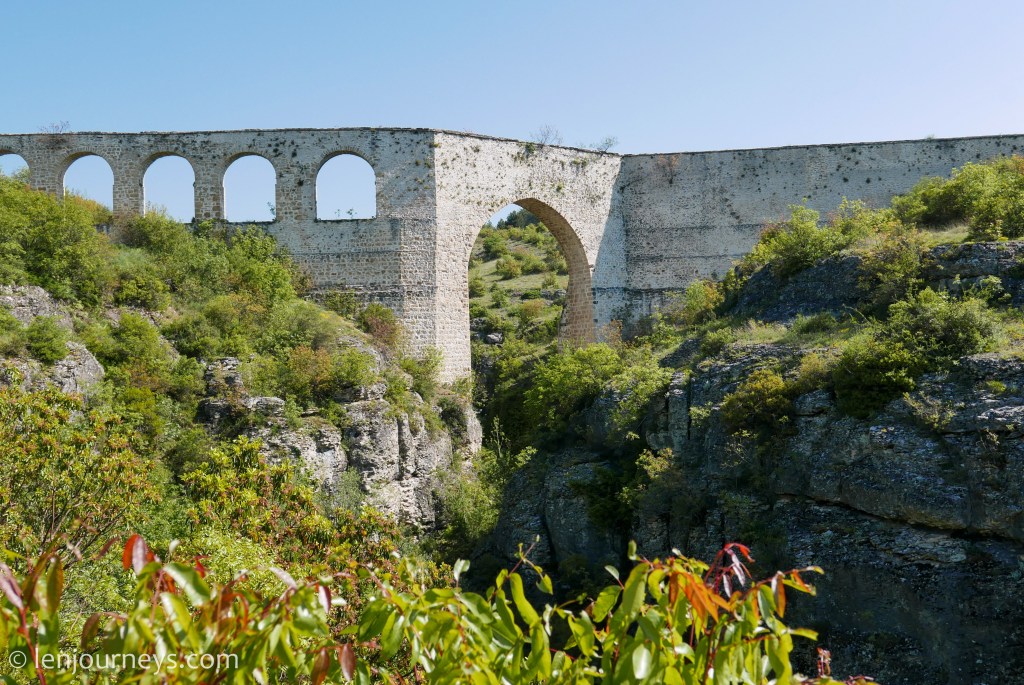
Sixty meters above the narrow canyon is the Incekaya Aquaduct – a feat of Ottoman engineering. Made of rubble stones, the magnificent structure measures 116 meters long and 110 to 220 centimeters wide. It features six impressive arches: one main and five auxiliary. Originally built during Byzantine times, the aqueduct was restored in the 1790s. Again, the grand vizier commissioned the construction to supply water to his hometown, Safranbolu.


Tips for visiting Safranbolu
- Safranbolu is easily accessible by bus from Ankara. It takes approximately three hours. From Istanbul, the journey is much longer, up to seven or eight hours. Tickets can be purchased online at Flixbus.
- The bus station is located a few kilometers outside of the city. You will need to take a taxi to get to the old town. In comparison to their counterparts in Istanbul, Safranbolu drivers are honest and diligent.
- The old town of Safranbolu is compact and possible to walk around. To get a fantastic vista over the town, hike to Hıdırlık Tepesi (Safarnbolu Castle) or the Museum of City History. Please note that some paths are relatively steep.
- Tokatli Canyon is only accessible by cars. So, a taxi is highly recommended. The trip costs about ₺60 return including waiting time. Right next to the canyon is the highly popular Crystal Terrace – the first of its kind in Turkey. The view is breathtaking, but the glass platform itself is pretty opaque.


I love these Ottoman towns. Their architecture is so unique and as you also said, the people are so friendly. Great post. Maggie
Thanks, Maggie. The locals are certainly more approachable than in Istanbul 🙂 One more thing I like about Safranbolu is the crowd. Though the town looks incredible, it’s not overwhelmed by tourists.
Safranbolu seems very charming! It looks like a really nice town to walk around and just get lost. I love how the roof tiles are not only used for the houses but also for those domes. It’s a big plus that a lush canyon lies just a few kilometers from the town. Did you try saffron-themed dishes while in town?
Good question! I don’t remember seeing many dishes containing saffron, except for tea, lokum, and ice cream. I thought they would use it more liberally, like Persian or Indian cuisine.
Perhaps saffron was added to the food, but I couldn’t read the description because they are all in Turkish 🙂